Key takeaways
- Aluminum electrolytic capacitors drift when left unpowered: TDK says their leakage current tends to increase, and applying voltage brings it back down.
- ABB and Siemens both set the line at one year: a drive that has been non-operational for a year or more needs its DC link capacitors reformed before normal use.
- The clock starts at manufacture, not at delivery. Both makers code the manufacturing date into the serial number.
- For shorter storage the maker's procedure can be as simple as power on, no load, 30 minutes. Longer storage needs an external, current-limited reforming circuit and a qualified electrician.
- The thresholds differ by maker and by model. Find the instructions for your exact unit before you switch it on.
Capacitor reforming is a controlled first power-up for equipment that has been unpowered for a long time. Variable frequency drives and power supplies use aluminum electrolytic capacitors, and these change while they sit on a shelf. If a unit has been unpowered for a year or more, the manufacturers tell you to reform the capacitors before you put it to work. Skip that step and, in ABB’s words, the capacitors can get damaged when the converter starts to operate.
This matters most for spares: a drive bought as new old stock, a unit pulled from the storeroom after years, or a used part with an unknown history. This guide collects what three manufacturers publish. It does not replace the manual for your unit, and the procedures below involve hazardous voltages.
What capacitor reforming is
TDK explains the effect in its storage guidance for power supplies: the leakage current of aluminum electrolytic capacitors tends to increase if they are left unpowered for a long period. Applying a voltage to the capacitor improves this, because the electrolytic solution has a repairing action that reduces the leakage current again.
Reforming (ABB also calls it re-aging; Siemens calls it forming) is simply that repair done on purpose, under controlled conditions, before the unit carries a load. In a drive, the capacitors in question are the electrolytic DC capacitors in the DC link.
When a stored drive needs reforming
The two drive makers we read agree on the threshold:
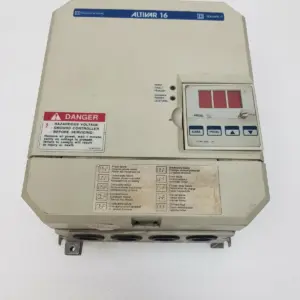
- ABB. Electrolytic DC capacitors in the converter module DC link need to be reformed if the module has been non-operational for a year or more. If it has been non-operational for less than one year, the capacitors do not need reforming. The instructions cover the ACS800, ACS850, ACQ810, ACSM1, ACS180, ACS380, ACH480, ACS480, ACH580, ACQ580, ACS580 and ACS880 series.
- Siemens. For the SINAMICS G120 Power Module PM240-2, form the DC link capacitors if the converter was not operational for longer than one year, or if its date of manufacture was more than one year ago when you commission the drive system for the first time.
That second Siemens case is the one buyers of surplus parts should notice. A drive that is still sealed in its box is not exempt: what counts is the time since it was built.
How to check the age of a drive
Both makers put the manufacturing date in the serial number.
- ABB serial numbers define the manufacturing week. In a 7-digit number such as 3260034, the 3 is the year (2003), 26 is the week and 0034 is a running number. In an 8-digit number such as 14250125, the first digit is the manufacturing country (1 = Finland), then 4 is the year (2004) and 25 the week. In a 10-digit number such as 1173200725, the first digit is the country, 17 is the year (2017) and 32 the week.
- Siemens codes the date of manufacture of a PM240-2 in positions 3 to 6 of the serial number. The hardware installation manual shows how to read it.
If the label is worn or you are not sure which number is which, see how to find your part number.
What the manufacturer procedures look like
How much work reforming takes depends on how long the unit has been off and on the model. ABB’s instructions sort its drives into two groups.
Shorter storage: power on, no load
ABB’s Method 1 is: switch the power on to the converter for 30 minutes, and do not load the converter while the reforming is ongoing. The converter wakes up its capacitors on its own, after which it is ready for use. Which storage times qualify depends on the type. For the ACS800-01, ACS850-04, ACS380-04 and ACS480-04, Method 1 applies when the non-operational time is between one and two years. For the ACS580-01, the ACS580-04 and the ACS880-01 it applies between one and three years.
Longer storage: an external reforming circuit
Beyond those limits, ABB requires an external reforming circuit connected to the drive’s DC terminals: a DC power supply, a diode bridge or a resistor circuit, depending on the module. The required reforming time comes from a diagram in the instructions and grows with the non-operational time. Where a DC supply is used, ABB limits the reforming current to a maximum of 500 mA and warns that the capacitors can get damaged if you use excessive DC voltage. Some small frames have no DC terminals, so not every method fits every drive; the instructions list which applies. ABB also notes that it can supply ready-made reforming devices.
Siemens describes forming for the PM240-2 as connecting power to the converter in the way shown in its manual. Follow the figure for your frame size and voltage.
We are deliberately not reproducing circuit values or reforming times here. They differ by model and voltage class, and they belong with the safety instructions that surround them in the manufacturer’s document.
Safety: this is electrician’s work
ABB’s instructions open the procedure with a warning: if you are not a qualified electrical professional, do not do electrical installation or maintenance work. Its safety steps include:
- Never work on the converter, motor cable or motor when input power is applied. After disconnecting the input power, always wait 5 minutes to let the intermediate circuit capacitors discharge before you start work.
- Measure that the installation is de-energized with a quality voltage tester, and verify the tester on a known voltage source before and after.
- Never switch on the converter power supply while the reforming circuit is connected. Lock the disconnector in the open position.
- Make sure the converter is clean and dry, with no condensation, before you start the reforming.
Those are ABB’s instructions for ABB drives. Use the safety chapter of the manual for your own unit.
Power supplies that sat on the shelf
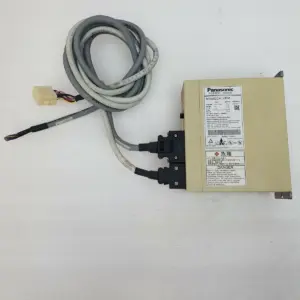
The same chemistry applies to power supplies. TDK’s guidance for its power supplies that use aluminum electrolytic capacitors is: when using a product that has been stored for a year or more, carry out no-load energization for about 30 minutes or more before use. The conditions it gives are rated input voltage, a load of 0 A and room temperature.
For storage itself, TDK recommends keeping the product in its box, out of direct sunlight, at 5 °C to 30 °C and 40% to 60% relative humidity, and avoiding places where temperature and humidity change drastically, because condensation can cause deterioration. It also recommends that products go into use no more than two years after delivery.
That is TDK’s advice for TDK products. For another brand, look for a storage note in the instruction manual or ask the maker. For help reading the rest of a power supply datasheet, see switching vs linear power supplies.
Before you power up a stored spare
- Identify the exact model from the rating plate and find the maker’s hardware or maintenance manual for it.
- Work out how long it has been unpowered. If you do not know, read the manufacturing date from the serial number and count from there.
- Look up the storage section of the manual (“reforming”, “forming”, “commissioning after a long storage time”) and see which procedure applies to that age.
- Check that the unit is clean and dry.
- Have a qualified electrician carry out the procedure exactly as the maker describes it, without a load connected.
- Keep spares alive. ABB says capacitors need no reforming if the module has been non-operational for less than a year, so a spare that is powered up on a schedule stays ready.
A new old stock or surplus drive has, by definition, spent time on a shelf, so plan for this step when you buy one. Our condition labels guide and condition guide explain what each listing condition means. You can browse drives and inverters and power supplies in stock, or send us a model number through Request a Part.
Frequently asked questions
What is capacitor reforming?
It is a controlled power-up that restores aluminum electrolytic capacitors after long storage. TDK notes that their leakage current rises when they are left unpowered and falls again once voltage is applied.
How long can a VFD sit unpowered before the capacitors need reforming?
ABB and Siemens both use one year for the drives covered by the documents cited here. Other makers and models can differ, so check the manual for your unit.
Does a new drive that was never installed need reforming?
It can. Siemens tells PM240-2 users to form the DC link capacitors if the date of manufacture was more than one year ago at first commissioning.
How long does capacitor reforming take?
It depends on the maker, the model and the time in storage. ABB's simplest method is 30 minutes powered with no load; longer storage needs an external circuit for a time read from ABB's reforming diagram.
Can I reform VFD capacitors myself?
ABB states that if you are not a qualified electrical professional, you should not do electrical installation or maintenance work. The DC link holds dangerous voltage, so leave it to an electrician working from the maker's instructions.
Do power supplies need reforming too?
TDK asks for about 30 minutes or more of no-load energization at rated input voltage before using one of its power supplies that has been stored for a year or more.
Sources
- ABB — Converter modules with electrolytic DC capacitors in the DC link: Capacitor reforming instructions (3BFE64059629 Rev H, 2021-12-21) (opens in a new tab)
- Siemens — SINAMICS G120 Power Module PM240-2 Hardware Installation Manual, 01/2020 (A5E33294624B AL), section 5.2 Commissioning after a long storage time (opens in a new tab)
- TDK — FAQ: What storage method do you recommend for the power supply? (opens in a new tab)